

Starting a new business is exciting, but attracting customers doesn’t happen by accident. Even if the product or service is excellent, people need a reason to discover it, trust it, and choose it over competitors.
That’s where a marketing plan comes in.
A marketing plan helps business owners stay focused on their goals, understand their customers, and decide where to spend their time and money. Instead of guessing what might work, they can follow a clear strategy built around specific objectives.
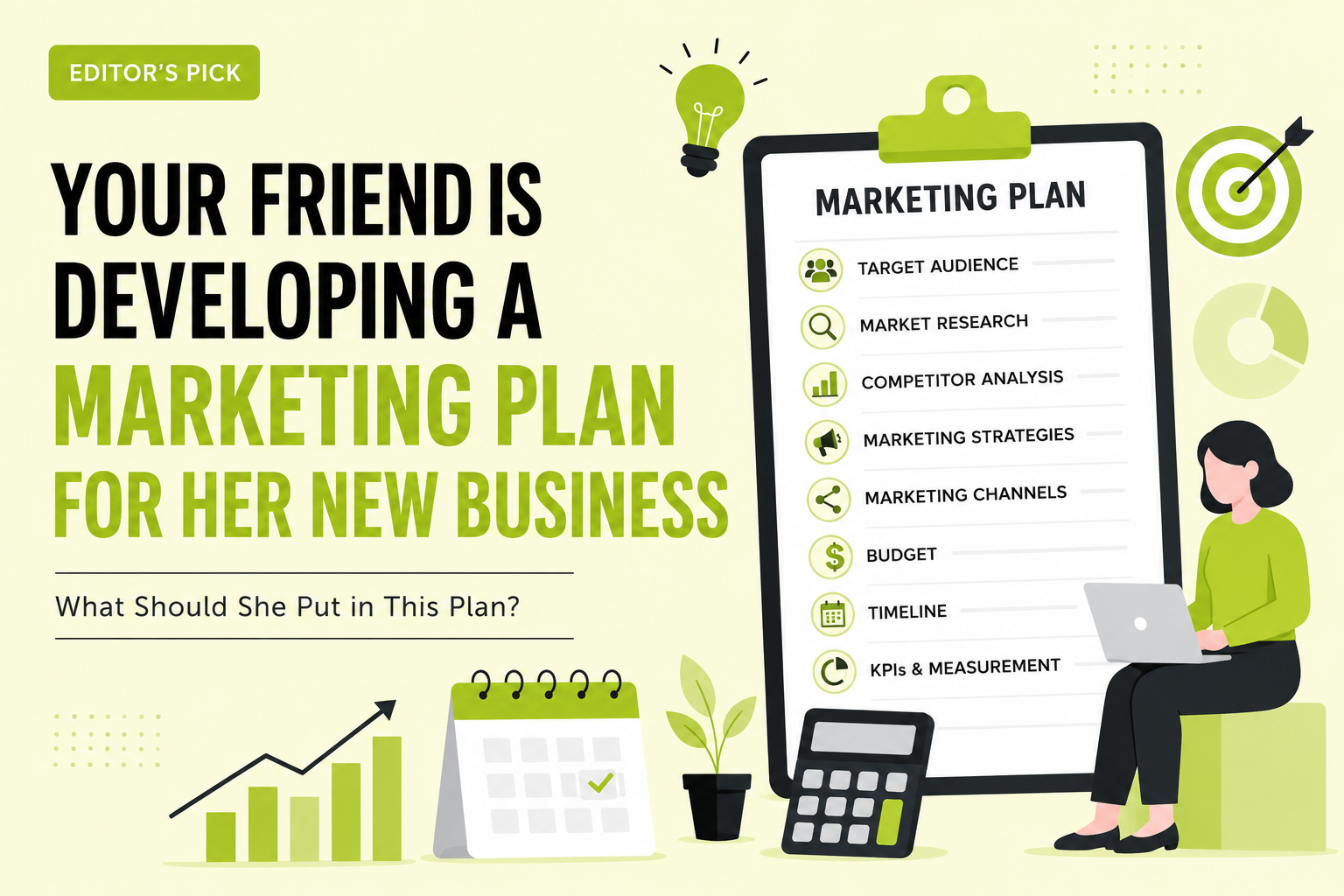
If your friend is creating a marketing plan for her new business, there are several important elements she should include.
Executive Summary
The executive summary provides a brief overview of the entire marketing plan. It should explain what the business does, who it serves, and what the main marketing goals are.
For example:
“A local bakery plans to increase monthly sales by 20% within six months by focusing on social media marketing, local search visibility, and customer referrals.”
Although this section appears first, many business owners write it after completing the rest of the plan.
Business Overview
The marketing plan should clearly explain the business itself.
This section should include:
- Business name
- Products or services
- Mission statement
- Business goals
- Target market
- Core values
The goal is to provide context for every marketing decision that follows.
For example, a business selling premium handmade furniture will market itself differently than a discount furniture store.
Target Audience
One of the biggest mistakes new businesses make is trying to market to everyone.
A marketing plan should define exactly who the ideal customer is.
Important details include:
- Age
- Gender
- Location
- Income level
- Occupation
- Interests
- Challenges
- Buying habits
Creating a customer profile can help.
Example:
Sarah is a 34-year-old marketing manager who works remotely. She values convenience, researches products online before buying, and prefers brands that provide educational content.
The more specific the audience, the easier it becomes to create effective marketing campaigns.
Market Research
Before spending money on advertising or content creation, your friend should understand the market she is entering.
This research should answer questions such as:
- How large is the market?
- Is demand increasing or decreasing?
- What trends are influencing customer behavior?
- What problems are customers trying to solve?
Good market research helps identify opportunities and avoid costly mistakes.
It can also reveal gaps that competitors have overlooked.
Competitive Analysis
Every business has competition.
A marketing plan should identify both direct and indirect competitors and evaluate their strengths and weaknesses.
Some questions to consider include:
- What products or services do competitors offer?
- How do they price their products?
- What marketing channels do they use?
- What do customers like about them?
- What complaints do customers have?
Understanding competitors helps businesses find ways to stand out.
Unique Selling Proposition
A unique selling proposition explains why customers should choose one business over another.
This should be a simple and clear statement that highlights a meaningful benefit.
Examples include:
- Faster delivery
- Better customer support
- Lower prices
- Higher quality products
- Specialized expertise
A strong unique selling proposition gives potential customers a reason to take action.
Marketing Goals
Every marketing plan should include measurable goals.
Vague goals such as “get more customers” are difficult to track.
Instead, goals should be specific.
Examples include:
- Increase website traffic by 30% within six months
- Generate 50 qualified leads per month
- Reach 5,000 email subscribers by the end of the year
- Increase online sales by 20% during the next quarter
Clear goals make it easier to measure progress and determine whether marketing efforts are successful.
Marketing Strategies
This section explains how the business plans to attract customers.
Most businesses use a combination of marketing methods.
Content Marketing
Creating useful content helps build trust and attract potential customers.
Examples include:
- Blog posts
- Guides
- Videos
- Case studies
- Industry reports
Helpful content can answer questions and position the business as an expert.
Search Engine Optimization (SEO)
SEO helps a business appear in search results when people look for relevant products or services.
Activities may include:
- Keyword research
- Content creation
- Technical improvements
- Link building
- Local SEO
SEO often provides long-term traffic without requiring continuous advertising spend.
Social Media Marketing
Social media allows businesses to connect directly with potential customers.
Popular platforms include:
- TikTok
- X
The right platform depends on where the target audience spends their time.
Email Marketing
Email remains one of the most effective ways to nurture leads and encourage repeat purchases.
Businesses can use email to:
- Share updates
- Promote products
- Send educational content
- Offer discounts
- Build customer loyalty
Paid Advertising
Paid advertising can generate results quickly.
Common options include:
- Google Ads
- Facebook Ads
- Instagram Ads
- LinkedIn Ads
Advertising campaigns should always have clear goals and performance tracking.
Marketing Channels
A marketing plan should identify the channels that will be used to reach customers.
Examples include:
- Website
- Search engines
- Social media
- Online communities
- Industry publications
- Events and conferences
It’s often better to focus on a few channels and execute well rather than trying to be everywhere at once.
Marketing Budget
Every marketing activity requires resources.
The marketing plan should outline how much money is available and how it will be allocated.
A sample monthly budget might look like this:
| Activity | Budget |
|---|---|
| SEO | $500 |
| Content Creation | $800 |
| Paid Advertising | $1,000 |
| Email Marketing Software | $100 |
| Design Tools | $100 |
A budget helps prevent overspending and ensures resources are allocated effectively.
Implementation Timeline
A marketing plan should include a timeline that outlines when activities will take place.
For example:
Month 1
- Complete market research
- Build website
- Set up social media profiles
Month 2
- Publish content
- Launch email newsletter
- Begin SEO work
Month 3
- Launch advertising campaigns
- Review performance data
- Optimize campaigns
A timeline helps maintain momentum and accountability.
Key Performance Indicators (KPIs)
KPIs are used to measure success.
Without tracking results, it’s impossible to know whether marketing efforts are working.
Common KPIs include:
- Website traffic
- Leads generated
- Conversion rate
- Cost per lead
- Customer acquisition cost
- Revenue
- Return on investment
Regular reporting allows businesses to identify what’s working and what needs improvement.
Sample Marketing Plan for a New Business
Imagine your friend is launching an online fitness coaching business.
Business Goal:
Generate 50 new leads per month within six months.
Target Audience:
Busy professionals between 25 and 45 years old who want personalized fitness guidance.
Marketing Strategies:
- Publish fitness articles each week
- Share workout videos on social media
- Build an email list using free fitness guides
- Optimize content for search engines
- Run targeted social media advertisements
Monthly Budget:
- Content creation: $600
- Advertising: $800
- Email marketing software: $100
- Design tools: $100
KPIs:
- Website traffic
- Email subscribers
- Consultation bookings
- Monthly revenue
This simple structure provides a clear roadmap for growth.
Common Marketing Plan Mistakes to Avoid
Many new businesses struggle because they make avoidable mistakes.
Some of the most common include:
- Trying to target everyone
- Ignoring competitors
- Setting unrealistic goals
- Failing to track results
- Spending money without a budget
- Using too many marketing channels at once
- Changing strategies before giving them enough time to work
Avoiding these mistakes can save both time and money.
Final Thoughts
A marketing plan is one of the most valuable tools a new business can have. It provides direction, helps prioritize resources, and creates a framework for measuring success.
Your friend should include an executive summary, business overview, target audience research, competitor analysis, unique selling proposition, marketing goals, strategies, budget, timeline, and performance metrics.
When these elements work together, they create a practical plan that helps turn business goals into measurable results. Rather than relying on guesswork, she can make informed decisions and build a stronger foundation for long-term growth.
