

Retail is one of the most competitive industries in the world. Whether customers shop online, visit physical stores, browse social media, or compare products on marketplaces, retailers are constantly competing for attention.
This competition is one of the main reasons retailers invest heavily in marketing. Without a strong marketing strategy, even excellent products can struggle to generate sales.
While marketing budgets vary from one retailer to another, most businesses concentrate a significant portion of their spending on a handful of proven strategies that consistently attract customers, increase sales, and improve retention.
So, what are the five marketing strategies that retailers spend half of their annual budget on?
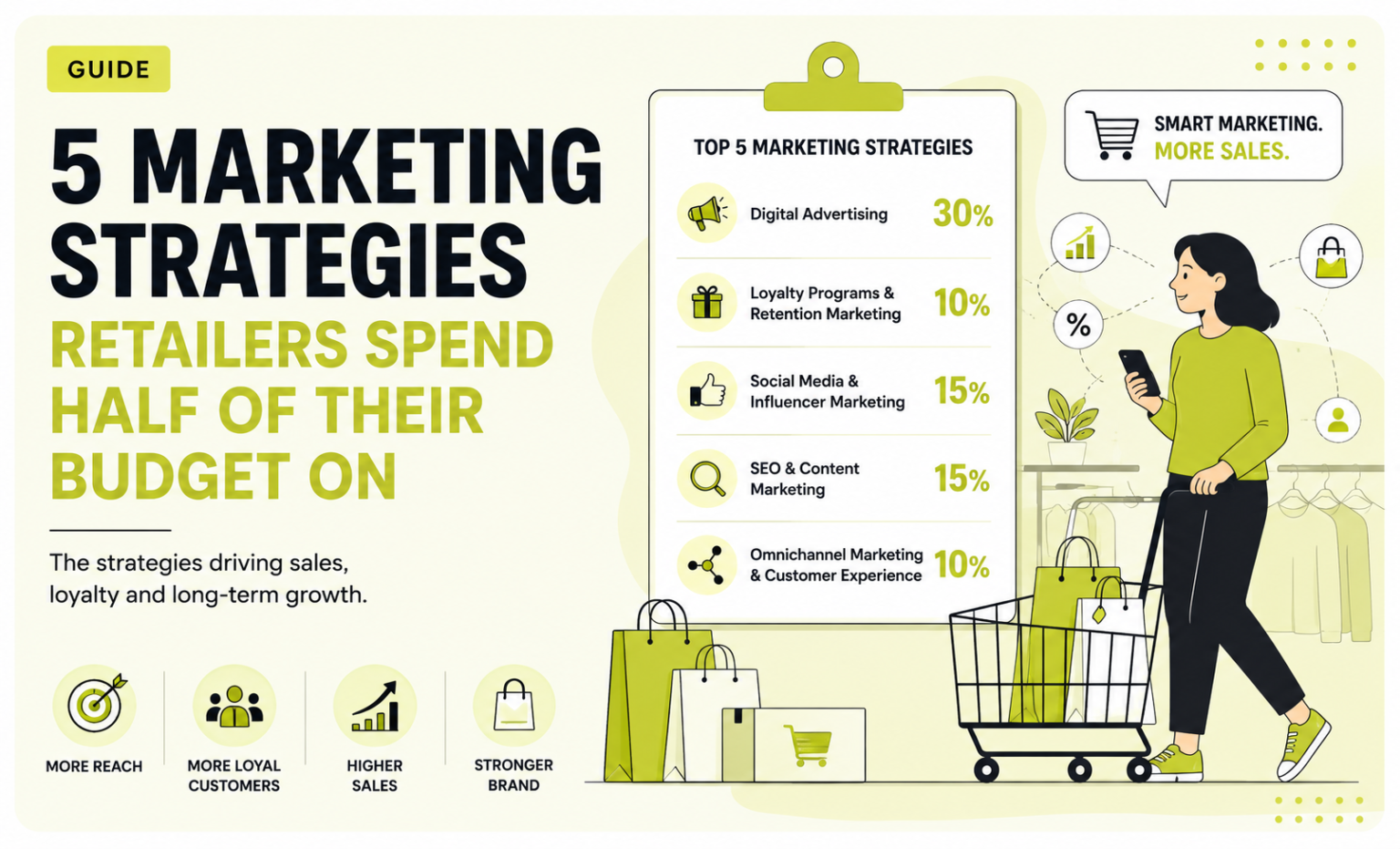
The answer is digital advertising, customer loyalty programs, social media marketing, search engine optimization (SEO), and omnichannel marketing.
Let’s examine each strategy and why retailers continue investing heavily in these areas.
Why Retailers Invest So Much in Marketing
Retailers face several challenges that make marketing essential.
Customers have more choices than ever before.
A shopper looking for a pair of shoes, a laptop, or a kitchen appliance can compare dozens of brands within minutes.
This means retailers must continuously invest in visibility, customer acquisition, and retention.
Marketing helps retailers:
- Increase brand awareness
- Generate website traffic
- Drive store visits
- Acquire new customers
- Increase repeat purchases
- Build customer loyalty
- Improve revenue growth
The businesses that consistently attract attention are usually the ones that invest the most in marketing.
1. Digital Advertising
Digital advertising often represents the largest share of a retailer’s marketing budget.
Retailers use paid advertising because it can generate traffic and sales almost immediately.
Unlike SEO, which can take months to produce results, paid advertising allows businesses to appear in front of customers as soon as campaigns go live.
Popular Retail Advertising Channels
Retailers commonly invest in:
- Google Ads
- Google Shopping Ads
- Facebook Ads
- Instagram Ads
- TikTok Ads
- YouTube Ads
- Amazon Advertising
- Display Advertising
Why Retailers Spend So Much on Paid Advertising
Paid advertising allows retailers to:
- Reach specific audiences
- Promote seasonal campaigns
- Increase product visibility
- Retarget previous visitors
- Launch new products quickly
For example, an online clothing retailer launching a summer collection can immediately place its products in front of shoppers searching for summer dresses, swimwear, or sandals.
This ability to generate immediate traffic makes digital advertising one of the largest budget categories in retail marketing.
2. Customer Loyalty Programs and Retention Marketing
Acquiring customers is expensive.
Keeping existing customers is usually much cheaper.
This is why many retailers invest heavily in loyalty programs and retention campaigns.
Instead of constantly finding new buyers, retailers focus on encouraging existing customers to purchase again.
Examples of Successful Loyalty Programs
Some of the most successful retail loyalty programs include:
- Starbucks Rewards
- Sephora Beauty Insider
- Amazon Prime
- Nike Membership
- Target Circle
These programs reward customers for repeat purchases and strengthen brand loyalty.
What Retailers Spend Money On
Retention budgets often cover:
- Reward systems
- Mobile apps
- Points programs
- Exclusive discounts
- Email marketing
- SMS campaigns
- Membership programs
- Customer data platforms
A loyal customer may spend thousands of dollars with a retailer over several years, making retention one of the highest-return marketing investments available.
3. Social Media Marketing and Influencer Campaigns
Social media has become one of the most important marketing channels for retailers.
Consumers discover products on social platforms every day.
Many shoppers now use Instagram, TikTok, Pinterest, and YouTube the same way previous generations used search engines.
Why Retailers Invest Heavily in Social Media
Social media helps retailers:
- Reach large audiences
- Build communities
- Generate engagement
- Showcase products
- Drive direct sales
- Increase brand awareness
Retailers often create content specifically designed for social platforms, including:
- Product videos
- Tutorials
- Behind-the-scenes content
- User-generated content
- Customer reviews
- Product launches
Influencer Marketing
Influencer marketing has become a major retail spending category.
Retailers partner with:
- Industry experts
- Content creators
- Micro-influencers
- Celebrity influencers
- Brand ambassadors
These partnerships help products reach audiences that already trust the creator’s recommendations.
For many retailers, influencer campaigns generate stronger engagement than traditional advertising.
4. Search Engine Optimization (SEO) and Content Marketing
SEO remains one of the most profitable long-term marketing strategies.
When customers search for products online, retailers want their websites to appear at the top of search results.
Unlike paid advertising, organic traffic does not require payment for every click.
Why Retailers Invest in SEO
SEO helps retailers:
- Increase organic traffic
- Reduce advertising costs
- Improve visibility
- Build authority
- Generate consistent sales
Many successful retailers invest heavily in:
- Technical SEO
- Product page optimization
- Category page optimization
- Keyword research
- Link building
- Content marketing
Content Marketing in Retail
Content marketing supports customers throughout the buying process.
Popular content formats include:
- Buying guides
- Product comparisons
- How-to articles
- Product reviews
- Videos
- Gift guides
For example, a furniture retailer may create content such as:
- Best Sofas for Small Apartments
- Leather vs Fabric Sofas
- How to Choose the Right Dining Table
This content attracts potential customers before they are ready to purchase and builds trust with the brand.
5. Omnichannel Marketing and Customer Experience
Customers no longer interact with retailers through a single channel.
A customer might:
- Discover a product on Instagram
- Visit the retailer’s website
- Read reviews
- Visit a physical store
- Join an email list
- Complete a purchase later
Retailers invest heavily in creating a smooth experience across all these touchpoints.
This approach is known as omnichannel marketing.
Areas Retailers Invest In
Retailers often spend money on:
- CRM systems
- Marketing automation software
- Customer analytics
- Inventory synchronization
- Mobile apps
- Customer support platforms
- Personalization tools
Why Omnichannel Marketing Matters
A seamless experience improves:
- Customer satisfaction
- Conversion rates
- Retention rates
- Customer lifetime value
Consumers expect retailers to remember their preferences and provide a consistent experience regardless of how they interact with the brand.
Sample Retail Marketing Budget Allocation
A retailer’s exact budget allocation varies by industry, but a typical breakdown may look like this:
| Marketing Strategy | Percentage of Marketing Budget |
|---|---|
| Digital Advertising | 30% |
| Loyalty Programs | 10% |
| Social Media & Influencers | 15% |
| SEO & Content Marketing | 15% |
| Omnichannel Marketing | 10% |
| Other Marketing Activities | 20% |
These five core strategies can easily account for half or more of a retailer’s annual marketing spend.
Which Marketing Strategy Delivers the Best ROI?
There is no single answer because each strategy serves a different purpose.
Paid advertising often generates the fastest results.
SEO typically delivers the strongest long-term return.
Loyalty programs often produce the highest customer lifetime value.
Social media excels at awareness and engagement.
Omnichannel marketing improves the entire customer experience.
The most successful retailers combine all five strategies rather than relying on just one.
Common Retail Marketing Mistakes
Many retailers waste marketing budgets by making avoidable mistakes.
Some of the most common include:
Focusing Only on New Customers
Ignoring existing customers can dramatically reduce profitability.
Relying Entirely on Paid Advertising
Advertising costs continue to rise, making diversification important.
Neglecting SEO
Retailers that ignore organic search often become dependent on advertising.
Poor Customer Experience
A frustrating shopping experience can destroy conversion rates.
Weak Data Collection
Without data, it becomes difficult to improve marketing performance.
Avoiding these mistakes helps retailers maximize their marketing investments.
Frequently Asked Questions
Why do retailers spend so much money on marketing?
Retailers face intense competition and must continuously attract, convert, and retain customers. Marketing helps maintain visibility and generate sales.
What marketing strategy do retailers spend the most money on?
Digital advertising is often the largest marketing expense because it generates immediate traffic and sales.
Is SEO better than paid advertising?
Both have advantages. Paid advertising produces faster results, while SEO provides sustainable long-term traffic.
Why are loyalty programs important?
Loyal customers typically spend more and purchase more frequently than new customers.
What is omnichannel marketing?
Omnichannel marketing creates a consistent customer experience across websites, stores, social media, email, and mobile apps.
Final Thoughts
Retailers invest heavily in marketing because visibility, customer acquisition, and retention directly impact revenue.
While marketing budgets differ from one business to another, five strategies consistently receive the largest share of investment: digital advertising, customer loyalty programs, social media marketing, SEO, and omnichannel marketing.
Together, these strategies help retailers attract customers, improve customer relationships, increase sales, and build sustainable growth.
Businesses that invest strategically in these areas are often better positioned to compete, adapt to changing customer behavior, and achieve long-term success.
